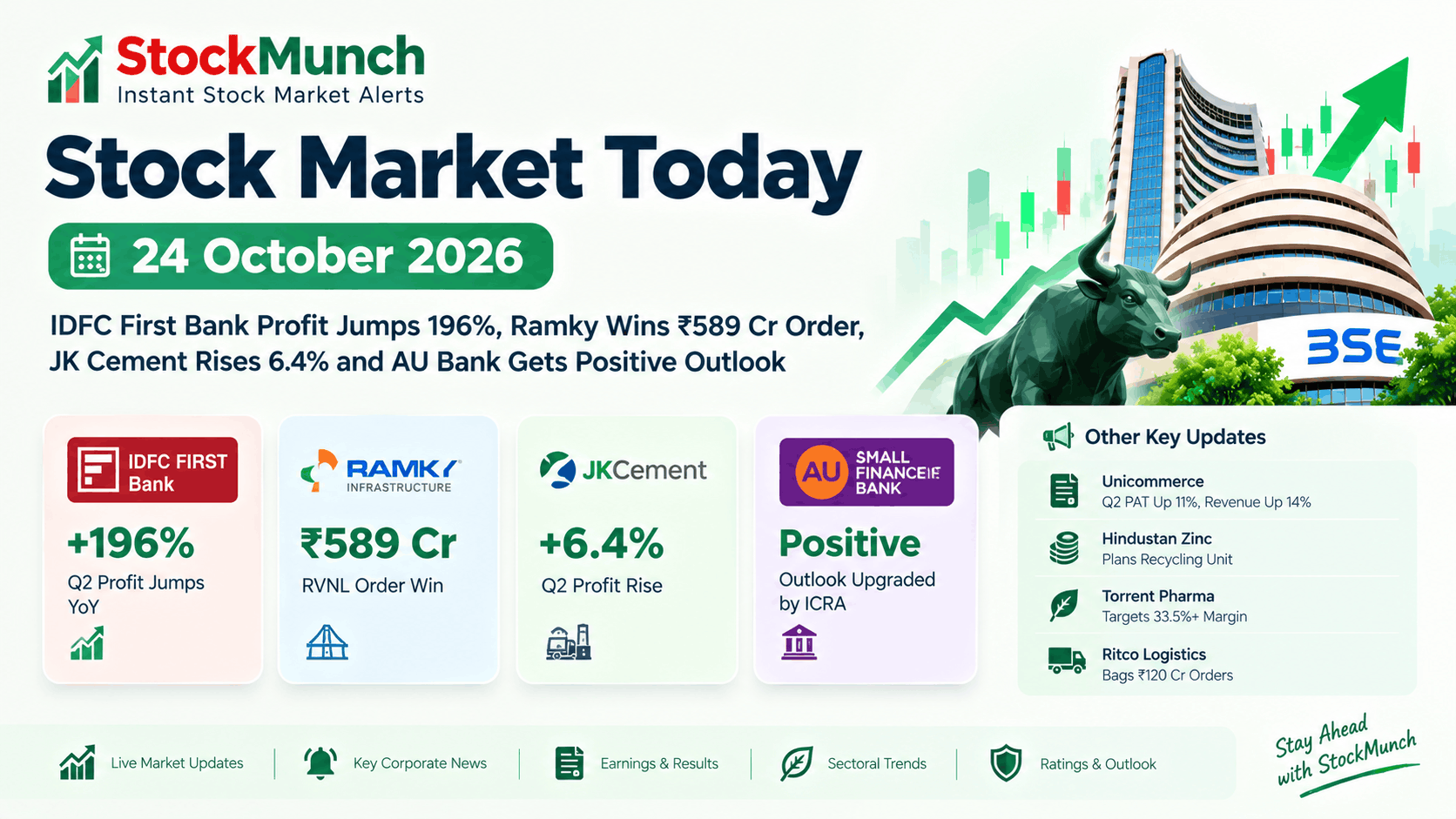
Marico Stock Market Update Today (5 August 2026): Best Q1 in 5 Years, EBITDA at 7-Year High & ₹20,000 Cr Revenue Vision
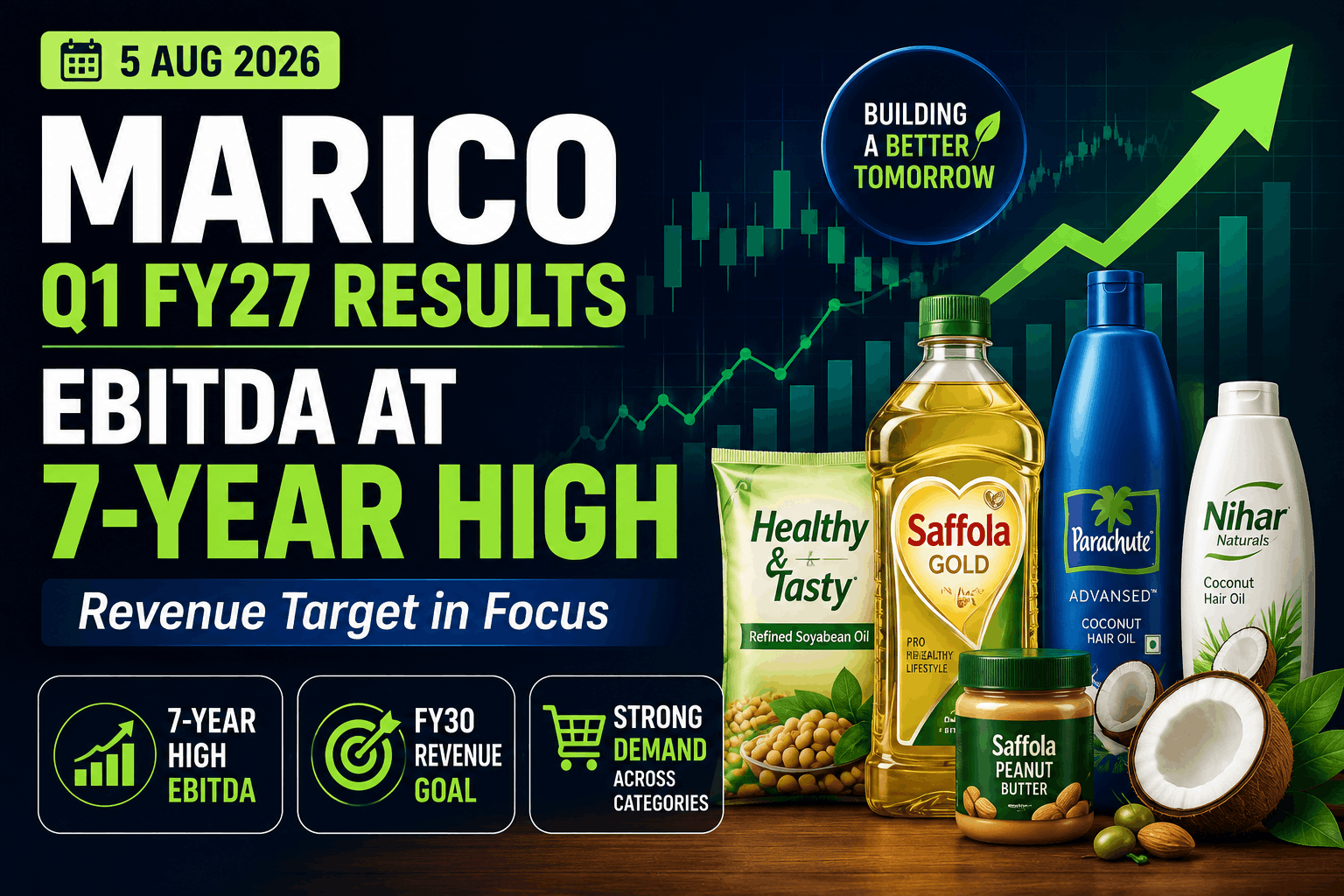
Marico stepped into the August 5 session as one of the FMCG sector's most compelling earnings stories of the quarter. The company reported its best Q1 performance in five years, with EBITDA climbing to a seven-year high — a combination that signals not just cyclical recovery but a potentially durable improvement in the company's profitability profile. Layered on top of a strong quarterly print are ambitious medium-term revenue targets, a clear digital business roadmap, and a Goldman Sachs buy rating that adds institutional credibility to the bull case.
Best Q1 in Five Years: What the Numbers Signal
Marico's Q1FY27 result has been described across multiple analyst and media reports as the company's strongest first quarter in five years. The headline that stands out is EBITDA reaching a seven-year high — a metric that captures operational efficiency more precisely than revenue alone, as it strips out interest, tax, and non-cash charges to reveal how much the core business is generating from its operations.
A seven-year EBITDA high is not a routine quarterly beat. It suggests that Marico has successfully navigated input cost pressures — particularly relevant for a company with significant exposure to copra prices through its Parachute franchise — while simultaneously growing volumes and protecting margins. For long-term investors, EBITDA at multi-year highs often precedes a sustained re-rating of the stock as the market adjusts earnings expectations upward.
Demand conditions appear to have supported this performance, with the company also indicating that demand remains strong enough to target double-digit growth in Q2FY27. A management willing to guide for double-digit growth in the subsequent quarter, immediately after a five-year-best Q1, reflects a level of business confidence that goes beyond conservative earnings management.
Marico's Q1FY27 EBITDA hit a seven-year high in what the company describes as its best first quarter in five years. A double-digit Q2 growth outlook, backed by sustained demand strength, suggests this is not a one-quarter phenomenon but a broader business recovery gathering momentum.
₹15,000 Crore Growth Plan: Parachute and Saffola at the Centre
Marico has outlined a ₹15,000 crore growth plan anchored around its two flagship brands — Parachute and Saffola. These are among the most recognised consumer brands in India, with Parachute commanding a dominant position in the coconut hair oil category and Saffola holding strong equity in the edible oils and health foods space.
The scale of the growth ambition — ₹15,000 crore — indicates that Marico is not looking to rely solely on market share defence. The plan implies significant category expansion, premiumisation within existing portfolios, and potentially new product extensions that leverage the brand trust already established in both franchises. For FMCG investors, brand-led growth strategies of this kind tend to be more defensible than volume-only plays, as they build pricing power over time.
₹20,000 Crore Revenue by 2030 and a ₹4,000 Crore Digital Business
Stepping back further, Marico has articulated a ₹20,000 crore revenue target by 2030, alongside a specific ambition to build its digital business to ₹4,000 crore. The digital business target is particularly noteworthy — it implies that Marico is actively investing in direct-to-consumer, e-commerce, and digitally-native brand channels as a meaningful portion of its overall revenue architecture, not merely as a supplementary sales channel.
A ₹4,000 crore digital business within a ₹20,000 crore revenue structure would represent 20% of total revenues — a significant proportion for a company whose historical strength has been built on traditional trade and mass distribution. Successfully executing on this digital ambition would diversify Marico's channel mix, improve consumer data access, and potentially support better margin profiles on premium digital-first products.
Marico's ₹20,000 crore revenue target by 2030 with ₹4,000 crore from digital channels positions it as an FMCG company actively managing its transition toward higher-margin, digitally-enabled revenue streams — a shift that could attract a new category of growth-oriented institutional investors alongside its traditional consumer staples following.
Goldman Sachs Rates Marico 'Buy' with ₹950 Target
Goldman Sachs has rated Marico a 'Buy' with a price target of ₹950, adding a layer of high-profile institutional endorsement to what is already a strong earnings print. Goldman's buy rating is significant not just for the target it implies but for the signal it sends about conviction — the firm is aligning itself clearly with the bull case rather than adopting a wait-and-see posture.
The Goldman rating arrives in a session where Marico's Q1 performance has already generated positive commentary, making it a confluence of delivered results and forward-looking analyst confidence — a combination that tends to attract fresh institutional buying interest and can sustain price momentum beyond the initial results-day reaction.
Strong FY27 Outlook: Management Confidence on Full Display
Marico's management has signalled expectations of strong FY27 growth following the best Q1 in five years. The full-year optimism is grounded in the operational reality of the quarter — high EBITDA margins, volume demand strength, and a brand portfolio that appears to be executing across both urban and rural market segments.
The broader FMCG sector has faced an uneven recovery, with rural demand improving gradually while urban consumption has remained relatively resilient. Marico's ability to deliver a seven-year EBITDA high in this environment suggests the company's brand investments and distribution reach are translating into commercial outcomes more effectively than many peers.
FMCG Sector Sentiment
Marico's Q1 result is a positive data point for the FMCG sector broadly. The session also saw positive commentary around the outlook for Nestlé and Nykaa, suggesting that consumer-facing businesses with strong brand equity are benefiting from the current demand environment. For Nifty FMCG index investors, Marico's performance reinforces the thesis that quality consumer staples names with pricing power and operational discipline can deliver margin expansion even in a cost-pressured environment.
The Parachute and Saffola-led growth plan also highlights an industry-wide trend toward brand-focused investment rather than broad distribution spending — a shift that tends to improve returns on capital over the medium term and support healthier sector-level valuation multiples.
Marico enters the second half of FY27 with its strongest operational momentum in years — a seven-year EBITDA high, a double-digit Q2 growth outlook, a Goldman Sachs buy rating, and a clearly articulated ₹20,000 crore revenue roadmap. The FMCG sector's long-term investors have a well-defined thesis to evaluate.
Market Outlook: What Investors May Watch
Bullish factors: Seven-year EBITDA high, best Q1 in five years, double-digit Q2 growth guidance, Goldman Sachs buy rating at ₹950 target, ₹20,000 crore revenue ambition by 2030, and a ₹15,000 crore brand-led growth plan anchored by Parachute and Saffola.
Factors to monitor: Copra and edible oil input cost trajectories that directly impact Parachute and Saffola margins, progress on the digital business buildout toward the ₹4,000 crore target, rural demand sustainability into the festive season, and competitive intensity in health foods and premium hair care categories.
Risks: Input cost volatility — particularly copra — remains a structural risk for Marico given Parachute's centrality to the portfolio. A reversal in rural demand or a sharper-than-expected monsoon impact on agricultural incomes could weigh on volume growth assumptions for Q2 and beyond. The digital business ambition, while strategically sound, carries execution risk and will require sustained investment that may pressure near-term margins.
Marico's strong Q1 and ambitious revenue targets are encouraging, but the ₹20,000 crore revenue goal by 2030 and ₹4,000 crore digital ambition are multi-year commitments that will require consistent execution across several market cycles. Investors should monitor quarterly progress against these milestones rather than pricing in the full target prematurely.
Marico's August 5 session encapsulates what a well-executed FMCG growth story looks like — delivered results, credible forward guidance, institutional backing, and a long-term roadmap that gives investors a clear framework to assess value creation over time. Whether the market has fully priced in this improved trajectory will depend on how consistently Q2 and subsequent quarters validate the confidence management has placed on display today.
Related Articles
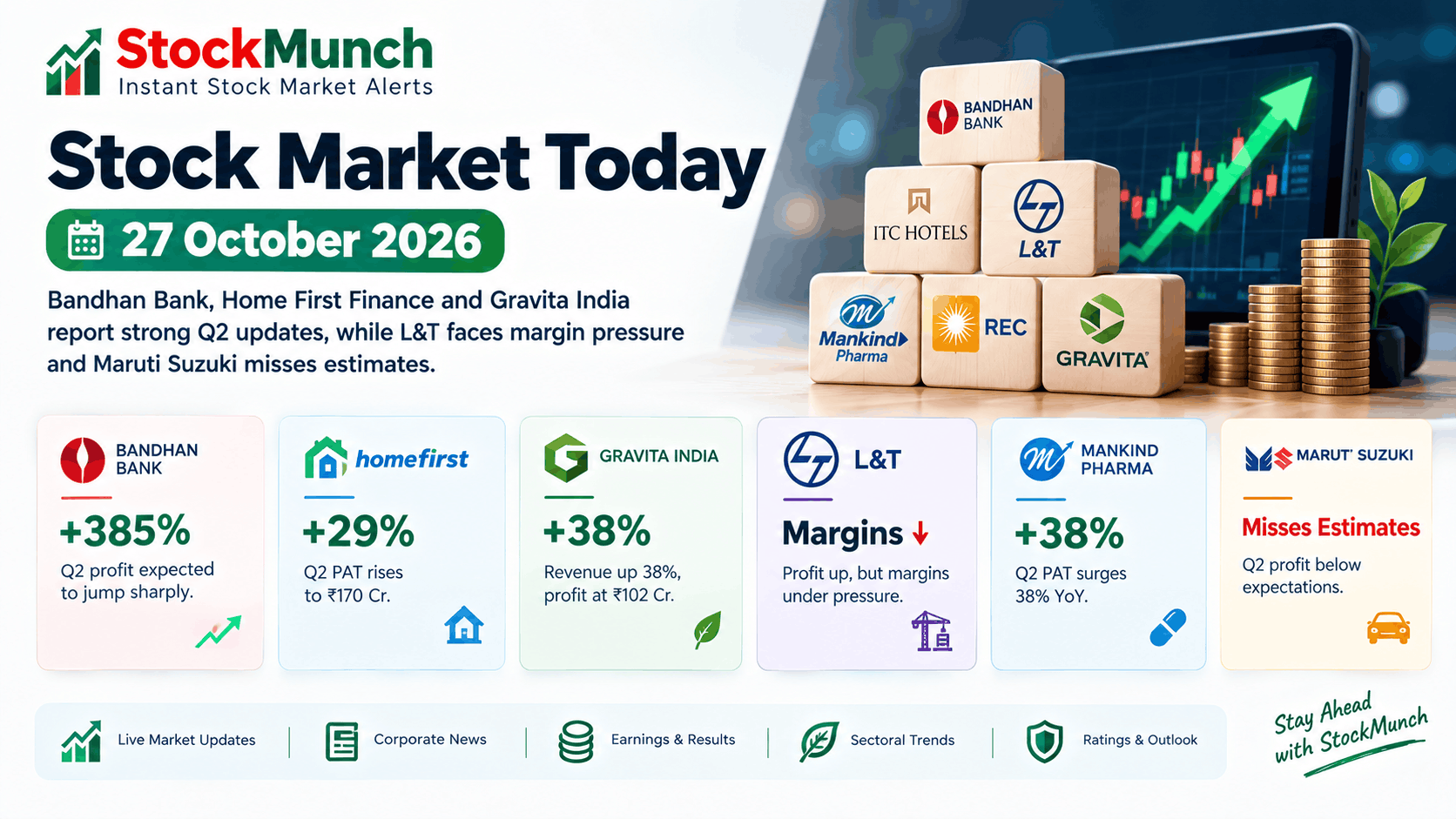
Stock Market Today (27 October 2026): Bandhan Bank, L&T, Gravita in Focus
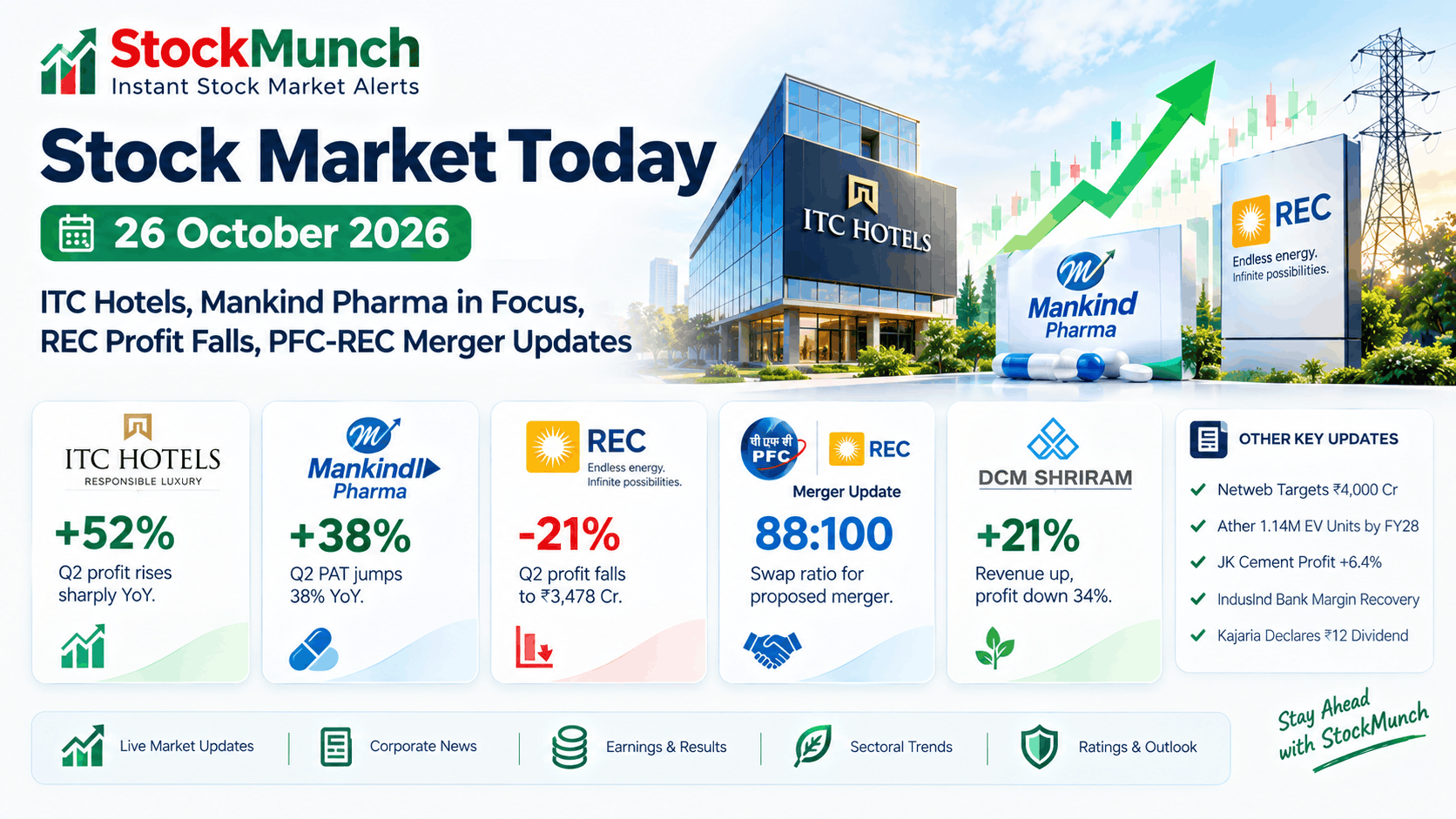
Stock Market Today (26 October 2026): ITC Hotels, REC, Mankind Pharma in Focus